Will you be receiving the property for life or a set period of years? The answer to this will be based on the type of property, freehold or leasehold.
Here we will guide you about freehold vs leasehold property in an easy way. This guide will help you buy property with confidence.
Key Takeaways
Freehold is permanent ownership, backed by a DLD title deed.
Leasehold gives rights for a fixed term, usually up to 99 years, without owning the land.
Foreigners can buy freehold only in areas designated by the ruler.
Older neighbourhoods are often non-freehold, although some plots and developments offer freehold ownership.
If the DLD's requirements are met, property investors can apply for a Golden Visa.
What is Freehold Property in Dubai?
The most secure type of ownership is freehold. They don't have an expiry date and you get the property title deed in your name. You may reside in it, lease it, sell it, give it away or give it to your family.
Dubai freehold property is particularly attractive to buyers looking for long term ownership. Since its launch in 2002, Dubai has allowed foreign buyers to own freehold properties, including apartments and villas.
Remember, freehold does not mean “no costs." You still pay yearly service charges for maintenance and security.
What is Leasehold Property in Dubai?
A leasehold is a property where you have the right to use the property for a specific period of time up to 99 years in Dubai. The land is not your property. At the end of the term, rights revert to the original owner unless renewed.
For those who want to buy a property in a certain location or who want to have the ownership of a property for a limited duration, leasehold Dubai properties can be a more appropriate choice.
Leasehold isn't renting. A long lease is registered with the DLD and counts as a real property right. You can generally live in the property or let others use it, within your agreement.
Two related terms you may hear:
Usufruct: Right to use and benefit from a property for a period of up to 99 years.
Musataha: Right to build on and use someone else's land for up to 50 years, subject to applicable regulations.
Freehold vs Leasehold in Dubai: Key Differences
Understanding the difference between freehold and leasehold property can help you make a more informed buying decision. Let's take a quick look at how they compare.
| Feature | Freehold | Leasehold |
|---|---|---|
| Ownership | Property and land, permanently | Right to use for a fixed term |
| Duration | No time limit | Up to 99 years |
| Title Deed | Issued by DLD in your name | Lease registered with DLD |
| Passing to family | Yes | Depends on the registered rights and applicable inheritance rules |
| Changes to the property | Allowed within community rules | May need the owner's approval, depending on the agreement |
| End of term | Not applicable | Right returns to the owner unless renewed |
| Residency link | May qualify for a Golden Visa if DLD requirements are met | Eligibility depends on the registered rights and applicable visa rules |
Legal Rules for Freehold and Leasehold Property in Dubai
Here are the main rules for freehold and leasehold properties:
Law No. 7 of 2006 is Dubai’s Real Property Registration Law. It sets who can own property and how rights are recorded.
UAE and GCC nationals can own freehold property anywhere in Dubai.
Foreign nationals can own freehold or take a lease or usufruct of up to 99 years, only in areas designated by the ruler. The list of areas is set out in Regulation No. 3 of 2006 and later additions.
Registration matters. A transaction is valid only when it is recorded in the DLD’s Property Register. A signed agreement alone does not make you the owner.
Normal rentals follow Dubai’s tenancy laws, which are separate from the ownership rules above.
Where Can You Buy Freehold and Leasehold Properties in Dubai?
Freehold areas are usually newer, master planned communities. Older neighbourhoods are often non freehold, which means ownership is generally restricted for UAE and GCC nationals.
However, some plots and developments have different ownership rights.
| Usually Freehold (Open to Foreigners) | Usually Non-Freehold (Mainly UAE/GCC Nationals) |
|---|---|
| Dubai Marina | Al Wasl |
| Downtown Dubai | Al Safa |
| Palm Jumeirah | Al Manara |
| Business Bay | Mirdif |
| Jumeirah Village Circle (JVC) | Umm Suqeim |
| Dubai Hills Estate | Al Warqaa |
| Arabian Ranches | Al Mizhar |
| Tilal Al Ghaf | Parts of Jumeirah and Al Barsha |
Watch out: Some areas are mixed. For example, Al Barsha South has freehold options, while other parts of Al Barsha are non freehold. New freehold projects like City Walk have also appeared in Jumeirah.
Never assume. Confirm the status of the exact plot with the DLD.
Freehold vs Leasehold: Costs and Investment Considerations
Freehold Costs to Plan for:
The purchase price
A DLD registration fee of 4% of the property value, generally split equally between the buyer and seller (2% each), unless otherwise agreed
Agent fees
Yearly service charges
Leasehold Costs to Plan for:
The purchase price, which may be lower than freehold in a similar location, depending on the remaining lease term.
Registration and agent fees
Service or maintenance charges, depending on your agreement
Thinking Like an Investor:
If it's freehold, it's an asset that doesn't expire. This simplifies resale and long term planning. The difference between the number of years remaining on a leasehold is significant.
With 90 years still to go on a lease, it is completely different from one with 25 years remaining. A shorter lease may be more difficult to sell and may be less valuable.
When comparing leasehold vs freehold Dubai properties, consider the ownership period, resale potential and long term investment goals.
What About Residency?
If you purchase property worth AED 2 million or higher, you will be eligible for a Golden Visa for 10 years, depending on the conditions set by DLD. One or more properties can be taken into consideration.
A bank letter stating the paid amount is required for mortgaged properties. Please note that requirements may change, consult the DLD or GDRFA before purchasing.
Freehold vs Leasehold: Which Property Should You Choose?
The right choice depends on who you are, where you want to buy and how long you plan to stay. Here is how to decide.
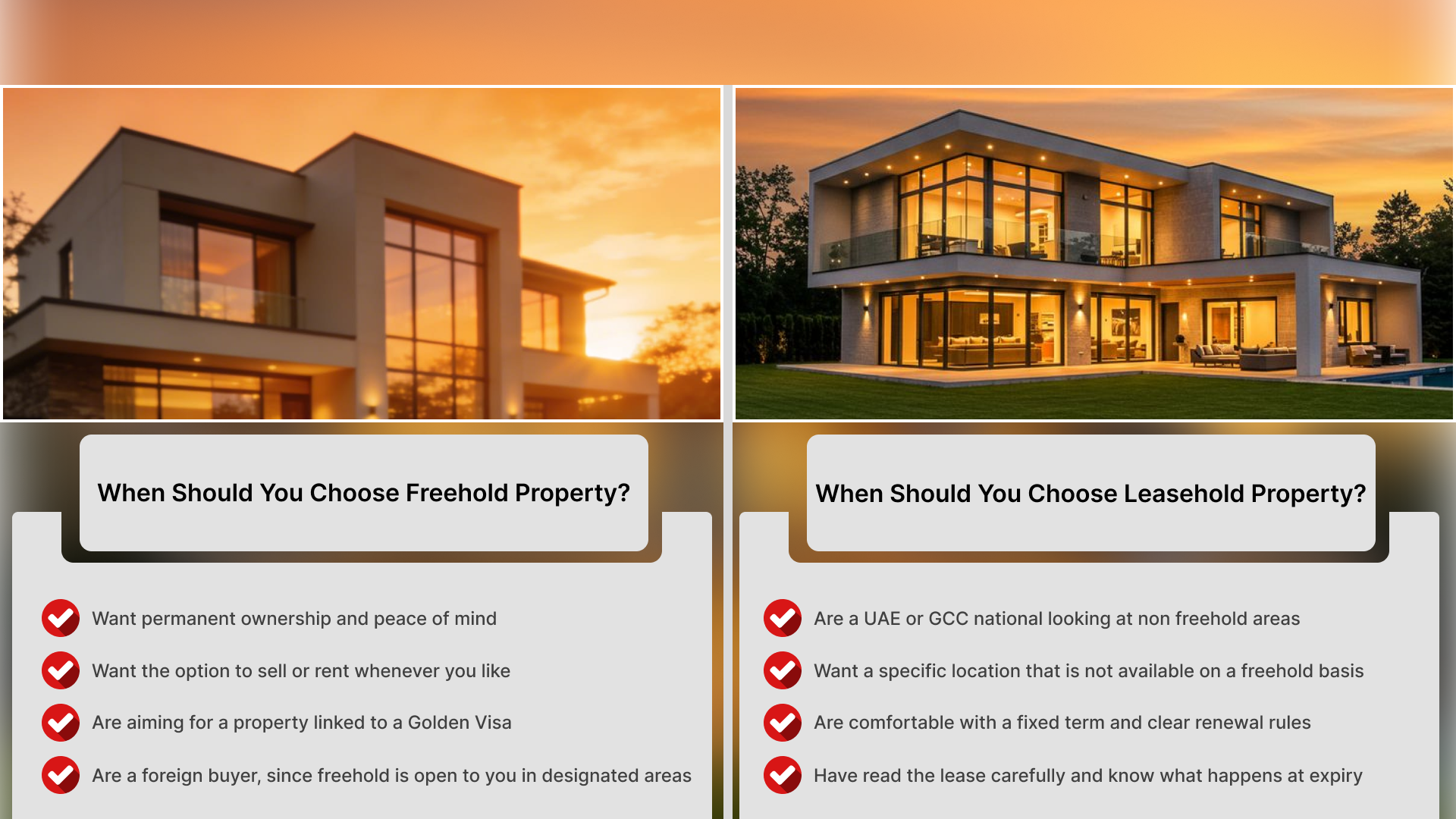
When Should You Choose Freehold Property?
Freehold is a good fit if you:
Want permanent ownership and peace of mind
Plan to hold the property for many years, or pass it to your family
Want the option to sell or rent whenever you like
Are aiming for a property linked to a Golden Visa
Are a foreign buyer, since freehold is open to you in designated areas
When Should You Choose Leasehold Property?
Leasehold may suit you if you:
Are a UAE or GCC national looking at non freehold areas
Want a specific location that is not available on a freehold basis
Are comfortable with a fixed term and clear renewal rules
Have read the lease carefully and know what happens at expiry
What Should You Check Before Buying?
Take your time with this list:
Area Status: Is the exact plot freehold or open to your nationality?
Title Deed: Check with DLD.
Lease Term: In a leasehold, check the number of years remaining and renewal conditions.
Service Charges: Inquire about the current service fee and what it's for.
Broker and Developer: Ensure that they are legit and registered.
Off-plan Purchases: Ensure that the sale is duly registered with DLD.
Mortgage: Talk to your bank in advance since interest rates may vary depending on the type of property.
Legal Assistance: If you are buying a large property, you should hire a property lawyer for it.\
For additional guidance on buying property in Dubai, Noor & Hoor Properties can help buyers understand available ownership options and explore suitable opportunities.
Conclusion
Freehold becomes a permanent owner, while leasehold becomes a temporary owner. When comparing freehold vs leasehold, freehold in a designated area is a less complex and safer path for the majority of foreign buyers.
However, with UAE and GCC nationals or buyers who may have a specific area of interest, leasehold may still be viable.
No matter which you choose, be sure to read through all the papers and check with the DLD. Some research today will prevent a major shock further down the road.