Dubai’s skyline gets a lot of attention, but the real question for buyers is simpler, who owns what you pay for?
“Freehold” will be a term you often come across when looking at Dubai real estate. This is important because it determines the control you have over your property.
This is a simple explanation of what is freehold property in Dubai so you can make a purchase with confidence.
Key Takeaways
Freehold means you own the property and the land share forever.
Foreigners can buy, but only in designated areas.
You can sell, rent, gift, or pass it on to family.
Leasehold gives rights for a fixed time only.
Check the area, developer, and total costs before buying.
What is Freehold Property in Dubai?
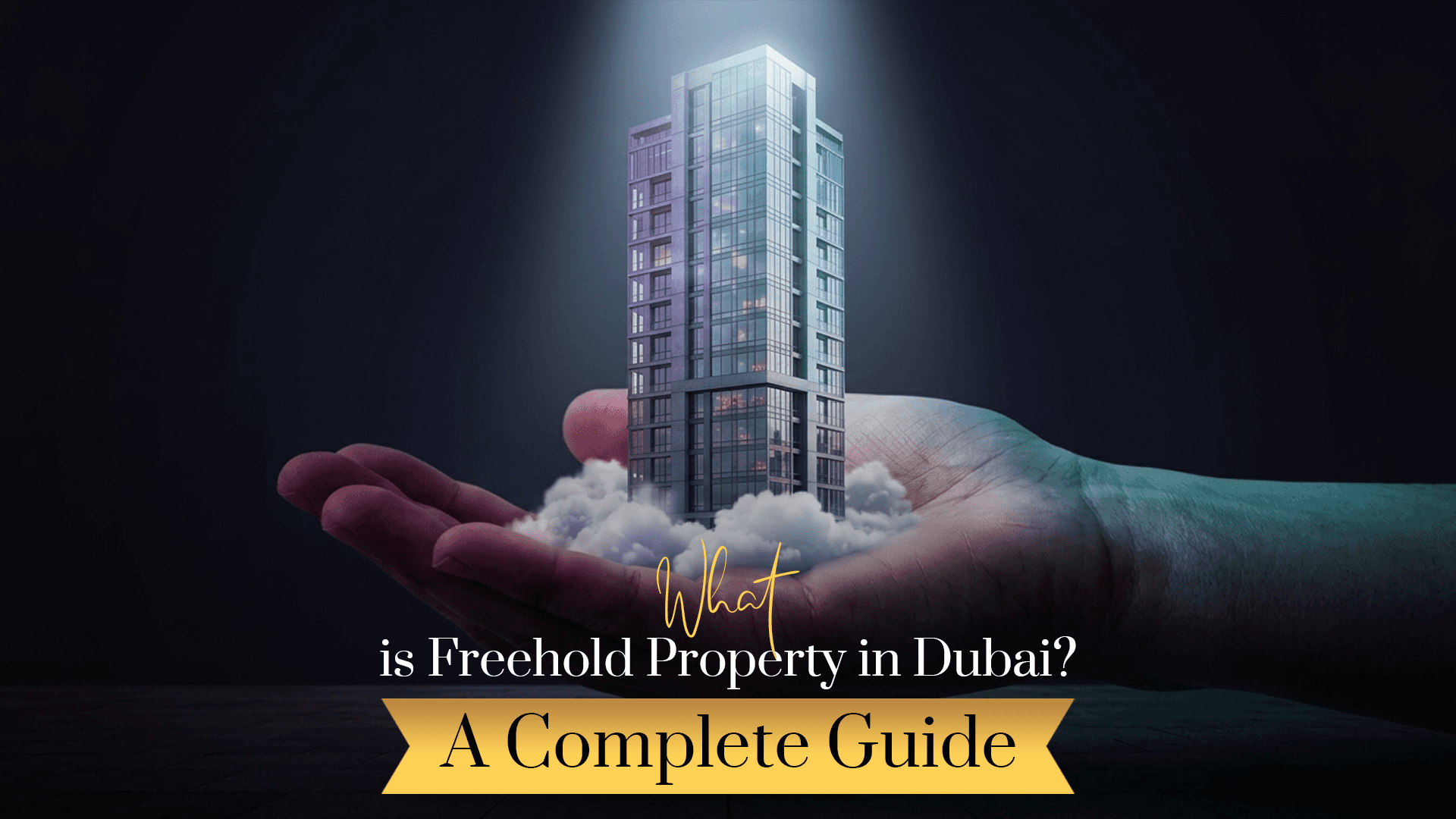
The freehold property in Dubai is real estate you own completely, with no time limit. You're not renting it or borrowing it from someone. Your name is placed on the title deed and the property belongs to you.
Consider it like owning your car rather than leasing it. You're in full control of it, and it can't be returned once a contract finishes.
Key Characteristics of Freehold Property
When it's freehold, you have full control, and it won't expire. Here are its key features:
Full Ownership: Owner of the unit and generally a share of land and common areas.
There is No Expiration Date: The ownership is not lost after a certain period of time.
Registered Title Deed: The Dubai Land Department (DLD) officially records ownership.
Open to Many Buyers: Local and international buyers can own in approved zones.
The Costs are Yours: You have service charges, maintenance fees and utility costs.
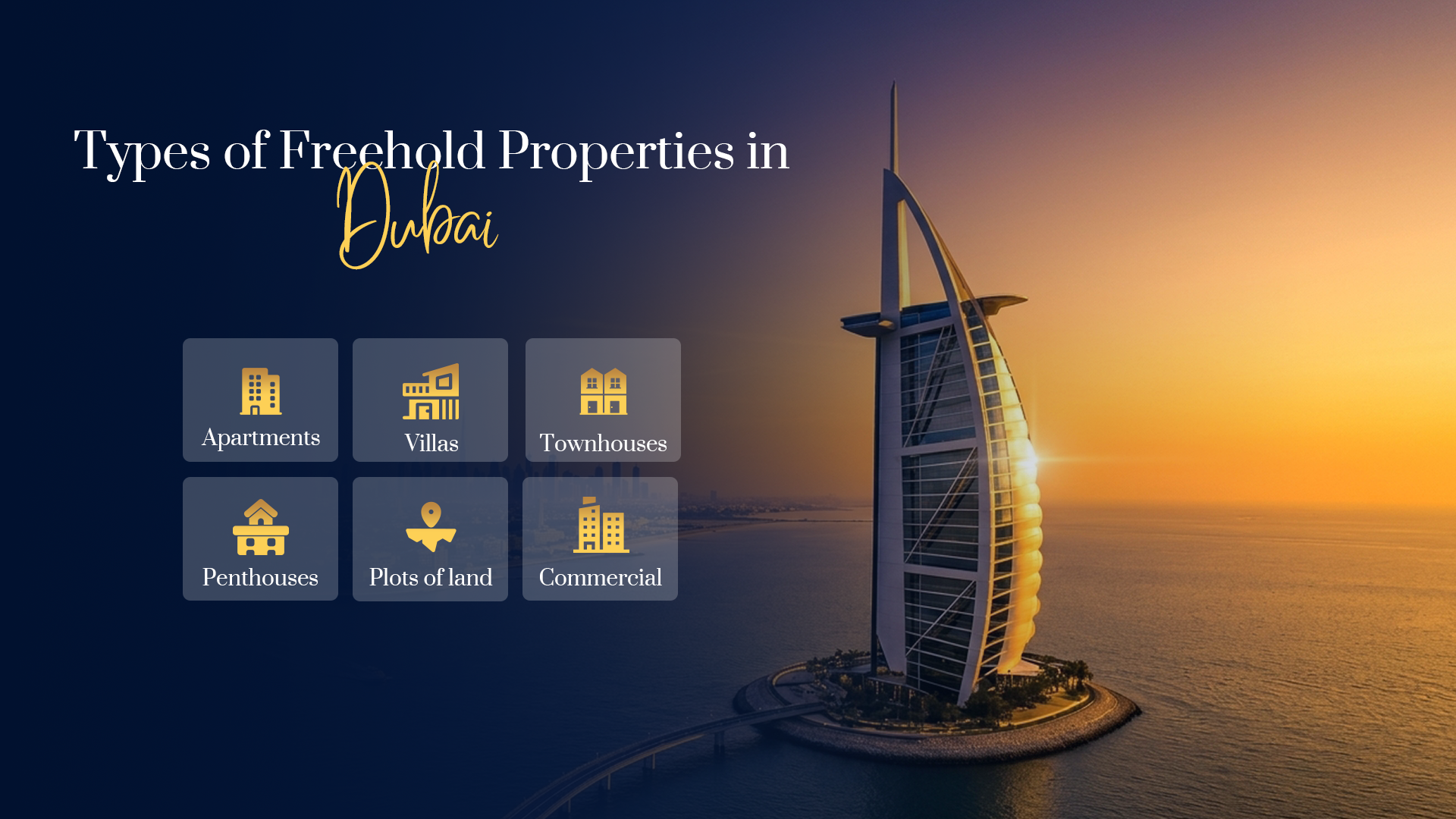
Types of Freehold Properties in Dubai
Freehold comes in many shapes and sizes:
Apartments: Studios to large family units are the most popular choice.
Villas: Independent houses with garden and privacy.
Townhouses: A middle option, with more room than an apartment at a lower price than a villa.
Penthouses: Luxury tops with great views.
Plots of land: There are freehold areas available for purchase of real estate and construction.
Commercial units: Offices and shops in certain freehold zones.
Freehold Property Laws in Dubai
The property market in Dubai was opened to overseas buyers in the early 2000s. Since then, the Dubai Land Department has taken care of all registrations, while Law No. 7 of 2006 covers property registration.
Here is what to know:
Foreign ownership is allowed only in government-approved freehold zones.
Every sale must be registered with the DLD.
There is a transfer fee of 4%, plus minor admin/registration fees.
Off-plan (under construction) projects are protected by escrow accounts, which hold buyer payments until work progresses.
Conditions and charges may vary, so check with the DLD or a licensed broker for the most updated information before paying a single dollar.
Who Can Buy Freehold Property in Dubai?
Almost anyone can:
UAE nationals and GCC citizens
Foreign investors, whether or not they live in the UAE
Expats living in Dubai
Companies, in many cases
You do not need to be a resident to buy. Remember, though, that you can only buy in designated freehold areas.
Property can also help with residency. Buyers who invest the minimum investment amount (currently AED 2 million or more) can be eligible for a long term Golden Visa. Please review the current rules first.
Benefits of Buying Freehold Property in Dubai
Owning a house with a freehold title means more than having a house title deed. It allows you control, flexibility, and an asset that will last. Here are the main benefits:
Complete Ownership Rights
This is the biggest benefit. The property is yours and you decide what you're doing. There is no requirement to get permission to sell or to rent it out from the landlord.
Long Term Investment Potential
Dubai is known for strong rental demand and high rental yields compared with many global cities. There is also no annual personal property tax, which helps your returns.
While prices may go up and down, the price of owning in a good location is a strong foundation for your investment.
Property Resale and Transfer Rights
You can sell whenever you want, to whoever you want. Many buyers like this freedom because they can exit when the market is strong. New buyers can also understand a freehold title, making it simple to sell a property.
Inheritance and Family Ownership
Freehold property can be passed on to your family. Since ownership never expires, your children can inherit a real asset.
It is wise to plan this early and to check how inheritance rules apply to your situation, especially if you are not a UAE national. Many owners prepare a will for this reason.
Flexibility in Property Use
You can live in it, rent it out long term, or list it as a holiday home (with the right permits). You can also renovate within the building’s rules. The choice is yours.
Freehold vs. Leasehold Property in Dubai
With freehold ownership, you own the land for life, and with leasehold ownership, you have a right to use the land for a designated amount of years.
Understanding the difference will help you select what is best for you and your budget.
| Feature | Freehold | Leasehold |
|---|---|---|
| Ownership | Full and permanent | Limited time only |
| Duration | No expiry | Usually 10 to 99 years |
| Land Ownership | Yes (shared share in buildings) | No |
| Resale Value | Often stronger | Drops as the lease runs down |
| Inheritance | Easy to pass on | Ends when the lease ends |
Leasehold can be cheaper at the start, but the clock is always ticking. Freehold costs more, but you keep the asset for good.
Popular Freehold Areas in Dubai
There are several types of freehold areas in Dubai, and each offers something different for various preferences and budgets. Some of the most popular are listed here.
Downtown Dubai: The home of the Burj Khalifa. Ideal for living and for image.
Dubai Marina: This is most favorite among those who prefer to rent along the Dubai coast.
Palm Jumeirah: Luxury villas and apartments on a famous island.
Business Bay: Near city center and is desirable for professionals.
Jumeirah Village Circle (JVC): More affordable, good for first time investors.
Dubai Hills Estate: This is a modern home community in Dubai that is green and family friendly.
Jumeirah Lake Towers (JLT): Mixed use and convenient to transport.
Arabian Ranches: Quiet villa living for families.
Tip: Decide on the area based on your goal, whether it be renting, price growth or for your family.
Things to Consider Before Buying Freehold Property in Dubai
Before signing, use this Dubai property investment guide to review the key factors below
You cannot rely on the seller's assurances that the land is freehold, confirm this with the DLD.
Make plans for your complete budget, fees, commission and service charges.
Check out the developer's track record and past projects.
Look into the title deed to see if there are any hidden debts.
Be aware of the service charges, because high charges will lower rents.
Have a goal, like rent, improve value or own a family home.
Go with a registered real estate agent.
Prepare for leaving by having an easily sellable property.
If you are comparing to buy freehold property in Dubai, freehold property in Sharjah, freehold property in Abu Dhabi, check the ownership rules, eligible areas, and registration requirements in each emirate before making a decision. Noor & Hoor Properties can also be a point of contact when exploring Dubai real estate options.
Conclusion
Understanding what is freehold property in Dubai helps you make a more informed decision about property ownership.
Freehold property in Dubai gives you real ownership, freedom, and a long term asset you can use, rent, sell, or pass down. With open rules for foreign buyers and many strong communities to choose from, it is easy to see why so many people invest here.
However, a good buy begins with a good job of homework. Do a safety inspection, estimate the costs and hire known professionals. In that case, your Dubai home can promise you safety and return as a beneficial one for the future.